

Live casino moves at the speed of the table. A roulette ball settles, a blackjack hand is paid, a baccarat shoe is shuffled, and the next round begins. At Casino Khajana, live casino sits alongside slots, Teen Patti, Andar Bahar, Rummy and cricket. The format suits players who want to watch cards and wheels rather than spin reels. This article follows three live-casino formats: roulette, blackjack and baccarat. It covers how rounds progress, how wagers are settled, and what to watch for. The tables available at any moment, their limits and their rules are set by the operator, and the specific rules of the variant you open govern play.
Roulette: the wheel sets the rhythm
Roulette is the simplest live-casino scene to read. A wheel with numbered pockets spins one way; a ball travels the other. When the ball drops, the number and colour decide the outcome. The dealer then clears losing chips and pays winning bets. That cycle repeats, usually with a short betting window before each spin.
The betting layout is where roulette becomes more than a race. A straight-up bet covers a single number. It pays the most but lands least often. Outside bets cover groups. Red or black, odd or even, and high or low are even-money groups: they cover eighteen numbers and pay 1:1. Dozens and columns are also outside bets, but they cover twelve numbers each and pay 2:1. Between the two ends of the layout are splits, streets, corners and lines, each with its own coverage and payout. The exact odds for each bet type are fixed by the table rules, so check the layout before you place chips.
On a single-zero wheel there are 37 pockets; a double-zero wheel has 38. Red and black each cover 18 numbers. Zero belongs to neither colour, and ordinary red or black bets lose when it lands unless a special table rule says otherwise.
Live roulette is a physical-wheel, dealer-led format. You see the wheel turn and the ball drop rather than a generated number. The betting window is short, so decide your stake before the dealer calls no more bets. Many players keep a simple plan: a few outside bets for coverage, or a small straight-up for interest. Neither changes the built-in edge of the payout structure. The table minimum and maximum are set by the operator and can differ between tables.
Blackjack: hand totals, soft aces and dealer rules
Blackjack is a comparing game. You and the dealer each receive cards. The aim is to get closer to 21 than the dealer without going over. Number cards count at face value, picture cards count as ten, and aces count as one or eleven. A hand with an ace counted as eleven is called soft; if the ace must count as one to avoid busting, the hand is hard. Ace-six is soft 17, because the ace can be eleven or one. A ten-six is hard 16, with no flexibility left.
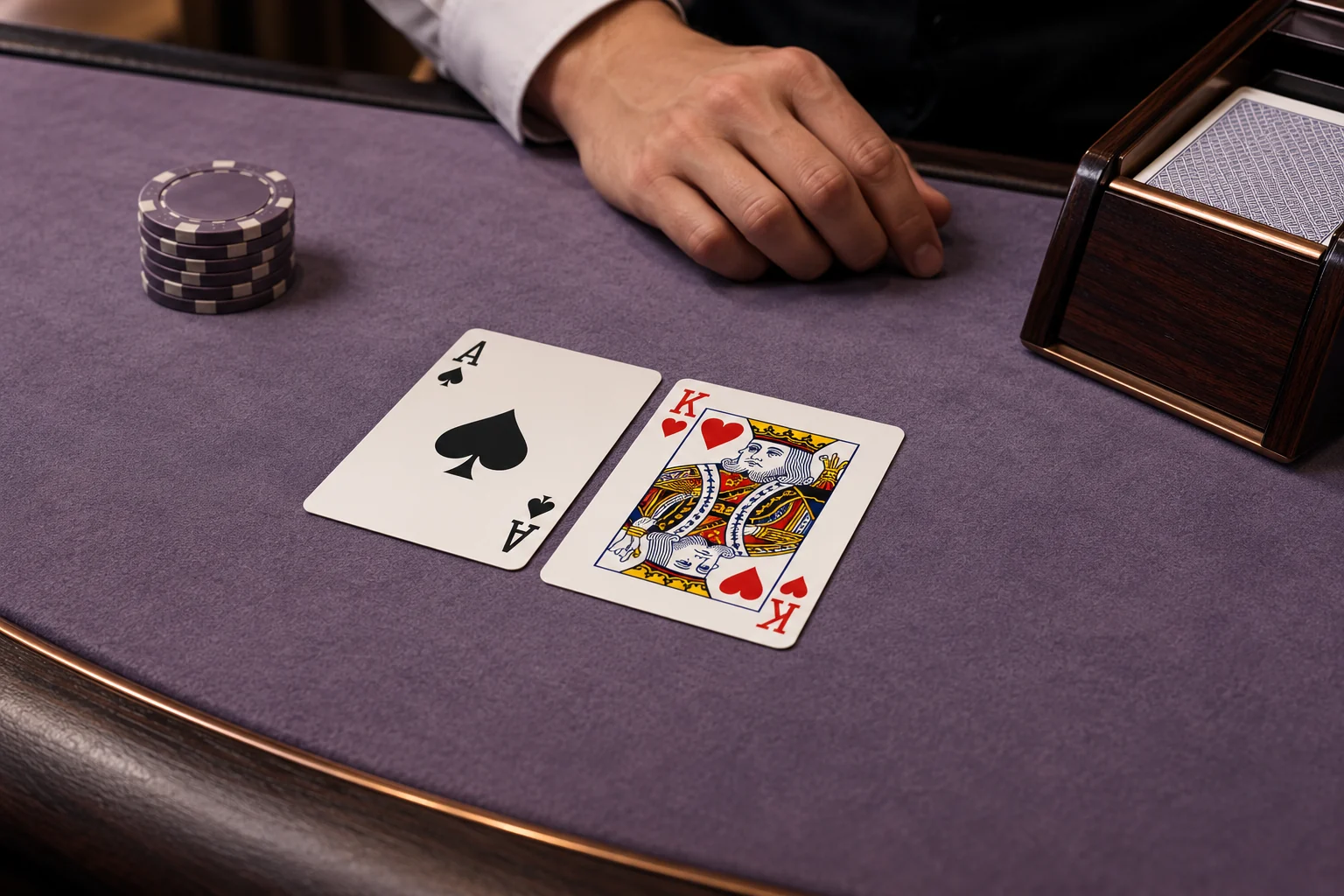
Totals above 21 are busts, and a busted hand loses before the dealer plays. A natural is usually an ace plus a ten-value card in the first two cards, and it is often called blackjack. A 21 built from three or more cards is still 21 but is not a natural, and it normally receives an ordinary payout. A dealer natural beats an ordinary 21, while an eligible player natural ties it. That distinction matters more than it looks, because a multi-card 21 can push or lose where a natural would stand level.
Your first decision comes after the deal. You can hit for another card, stand on your total, or use other options if the table allows them, such as doubling or splitting pairs. The dealer then plays according to fixed rules. Common dealer rules include standing on all 17s or hitting soft 17. These rules affect the house edge, so they matter. The table will state whether the dealer stands or hits on soft 17, whether doubling is allowed after a split, and how many decks are in play. Those details are part of the variant, not universal.
Blackjack payout also depends on the table. A natural often pays 3:2, but some tables pay 6:5. The difference is significant over time. Check the payout before you sit down. Insurance, even money and surrender are optional rules that may or may not be offered. If a table does not offer them, you cannot use them.
Live blackjack adds a dealer and a physical shoe. The dealer announces totals and follows the house rules. You act on your hand through the interface. The pace is usually brisk, with several players at the table. Because decisions are simple, blackjack can feel less chaotic than roulette. But the rule variations mean two tables that look similar can play differently. Read the table information before your first bet.
Baccarat: two-card totals and fixed drawing rules
Baccarat looks complicated from the outside and is simple once you see the pattern. Two hands are dealt: the Player and the Banker. These are labels, not people. You bet on which hand will win, or on a tie. Card values are straightforward: aces count as one, tens and picture cards count as zero, and other cards count at face value. Totals are calculated modulo ten, meaning you drop the tens digit. A hand of seven and six totals thirteen, which counts as three.
An eight or a nine on the first two cards is a natural. If either hand holds a natural, the round usually ends there and the hands are compared. Otherwise the fixed drawing sequence begins. The Player hand draws a third card on totals of zero to five and stands on six or seven. The Banker hand then draws or stands according to its own total and, when the Player has drawn, the value of the Player’s third card. You do not make hit or stand decisions. The dealer follows the rules, which is why baccarat moves quickly and why the table can feel calm. The only decision is where to place your wager before the deal.
Player and Banker bets pay differently. The fixed drawing rules give the Banker hand a slightly higher chance of winning, and the usual way tables balance that is a commission on Banker wins, commonly five percent. Some tables instead offer no-commission variants with adjusted payouts on certain Banker totals. Tie bets pay more but are less frequent. The exact payouts and commission are set by the table rules. Some tables offer side bets, such as pairs, but these are optional and carry their own odds. If you do not want side bets, ignore them.
Live baccarat often uses a shoe of cards, and the dealer turns them face up. The rhythm is steady: deal, total, draw if required, settle. Because there are no player decisions after the bet, baccarat can suit players who prefer to watch the cards. The table minimum and maximum still apply, and the pace is controlled by the dealer and the software.
Table pace, wagers and settlement across live casino
All three formats share a structure: place a wager, watch the round, receive settlement. The differences are in the decisions and the pace. Roulette gives you a betting window and a spin. Blackjack gives you hand decisions and a dealer who follows fixed rules. Baccarat gives you one bet and fixed drawing rules. None of them guarantees a win. The house edge is part of the game, and results vary.
At Casino Khajana, live casino is one of several categories in the brand’s published description. Slots, Teen Patti, Andar Bahar, Rummy and cricket are also listed there. The same description notes deposits via UPI or Paytm, balances held in INR and 24×7 support for account or payment questions. The casino is for adults aged 18 and over, and terms and conditions apply. Before playing, check the specific table rules for the variant you choose, including limits, payouts and dealer procedures. Those rules govern the game, not this article.
If you are new to live casino, start with a table that matches your comfort level. Watch a few rounds. Set a budget before you join. Keep track of what you stake, because staying inside that budget is your own responsibility. Live casino is entertainment, and the formats above are games of chance. Play within your means, and treat the table pace as part of the experience rather than a reason to chase losses.
For a broader look at the platform, see the Casino Khajana India casino article. If slots are more your pace, the Casino Khajana slots article covers that category. For account or payment help, the contact page is the place to start.
18+. Casino games involve risk. Play responsibly and within your limits. Terms and conditions apply.